
Guilin & Yangshuo: Where Mountains Grow from Water

✨ A Landscape Painted by Nature Itself ✨
⏱️ Reading time: 11–12 minutes
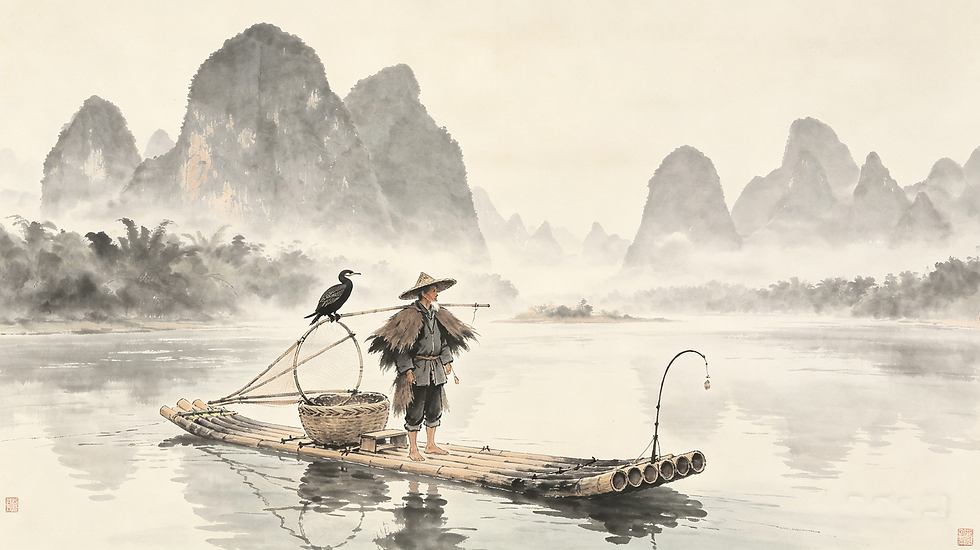
Scene: Iconic sunrise view — mist‑shrouded karst peaks rising vertically from the calm Li River, a lone bamboo raft drifting across the water, soft golden light breaking through the clouds.

Guilin sits in the heart of Guangxi, a region where nature seems to have followed its own artistic rules. For over a thousand years, poets, painters, and travellers have come here to marvel at a landscape unlike any other: hundreds of steep, forest‑cloaked karst peaks rising straight from flat plains and winding rivers, as if painted with delicate brushstrokes. It is often said that “Guilin’s scenery is the finest under heaven” — and once you see it, you will understand why.
But beyond the postcard views lies a living, breathing world — one shaped by centuries of harmony between people, animals, and the land. At Gigway Travel, we don’t just bring you to see the view — we let you live it. Slow down, breathe in the fresh, mist‑tinged air, and discover the quiet magic of southern China.
👉 Explore our collection: Guilin & Yangshuo Private Journeys | View All Exclusive Tours
🌿 A Landscape Shaped by Time — and Life

The story of this land began millions of years ago, when ancient seabed slowly lifted, rainwater carved deep channels through limestone, and what remained became these sharp, elegant peaks. The Li River flows like a silver ribbon through the centre, its waters fed by springs and mountain streams, reflecting the sky and the mountains so clearly it is hard to tell where the land ends and the water begins.
This is not just scenery — it is a rich ecosystem, home to wildlife you will rarely see in busier parts of China. As you drift along the river or walk the country lanes, keep your eyes open:
🐆 Wildlife of the Karst and Waters
Cormorants: The most famous companions of the river fishermen. These sleek, dark‑feathered birds dive with incredible speed, catching fish deep below the surface. For generations, fishermen have trained them — tying a soft ring around their necks so they can swallow only small fish, bringing the larger catch back to the boat. It is a partnership older than memory, one of nature and human skill working together.
Water buffalo: The gentle giants of the fields. You will see them standing knee‑deep in irrigation canals or resting under the shade of banyan trees, their wide horns curving gracefully, their eyes calm and wise. For centuries, they have pulled ploughs through the thick, fertile mud, turning the land into the rice paddies that feed the region. To the villagers, they are not just working animals — they are trusted members of the family.
Birdlife: The trees and cliffs are alive with sound. You may spot crested kingfishers with bright blue wings darting over the water, elegant egrets standing motionless in the shallows waiting for fish, and pheasants with iridescent plumage gliding through the bamboo thickets. High above the peaks, black kites circle on rising warm air, watching over the valley below.
Smaller creatures: In the evening, fireflies turn the edges of the fields into a sky of tiny floating lights; frogs sing in chorus from the ditches; and wild monkeys sometimes appear high on the rock faces, curious and quick, watching visitors from a safe distance.
🚤 Drifting on the Li River: Where Time Slows Down

There are two ways to travel the Li River, and each tells its own story — one smooth and leisurely, the other quiet and intimate. Whichever you choose, you are not just moving from one place to another; you are entering a living painting that has inspired poets and artists for over a thousand years.
🚢 The Li River Classic Cruise
Step aboard one of our premium vessels, and leave the noise and rush of daily life behind. Designed to sit low and close to the water, with private cabins and wide open decks, it offers a serene sanctuary away from the crowds. As the soft hum of the engine begins and you pull away from the dock, the sounds of the town fade completely. All you hear is the gentle swish‑lap of water against the hull, the distant call of a water bird, and the rustle of wind through bamboo groves.
The river here is wide and glass‑smooth, its surface so clear it acts like a mirror — painting the pale blue sky, soft white clouds, and deep green mountains twice over, once above and once below. Every bend reveals a new scene: peaks shaped like giant brushes, elephants drinking, or even the legendary “Nine Horses Mural Hill”, where patterns in the rock are said to look like galloping horses if you know where to look.
Glide past villages built on stilts, farmers tending rice shoots, and buffalo standing half‑submerged in the cool water. Sit back with a cup of local osmanthus tea, feel the mist‑scented breeze, and watch the light shift from silver at dawn to gold as the day unfolds.
“The views were timeless and the private cabin provided a serene sanctuary away from the main deck.” — Guest Review
🎋 The Bamboo Raft: Touch the River’s Soul
If you want an experience even closer to the heart of this land, choose the bamboo raft — the oldest, most timeless way to travel these waters, used by fishermen and villagers for more than a thousand years.
At first glance, it looks beautifully simple: long, sturdy bamboo poles, cured for months and bound tightly together, polished smooth by years of sun and flow. It sits just inches above the surface, stable yet light enough to drift with the current. You sit low, your feet almost level with the water, and the only sound is the soft splash‑thud of the guide’s pole as he pushes gently against the riverbed.
This is where you truly feel the river: the smell of damp earth and sweet bamboo, the coolness of the water if you dip your hand, the sight of tiny fish darting below and dragonflies hovering above. Your guide knows every bend, every legend, every hidden spot. He will let you drift freely in quiet stretches, so you can listen only to the flow of water and the songs of birds.
🦅 The Fisherman and His Cormorants: A Timeless Bond
As you drift, you will often see the most iconic sight of all — the traditional Li River fisherman. He stands tall and steady on his raft, wide‑brimmed straw hat shading his eyes, long wooden pole resting lightly in the water. Perched along the edges are three or four large, dark‑feathered cormorants — sleek, powerful birds with eyes sharp enough to spot fish metres below.
This is a partnership that has lasted for centuries. The birds are raised from chicks, trained with patience, and a soft, loose ring is tied gently around their necks — never tight enough to harm, but just enough to stop them from swallowing the larger fish they catch. When called, they dive into the water, reappear moments later with a fish in their beak, and return to the raft to deliver their catch, waiting for their small reward.
It is not just work — it is a tradition, a skill, and a bond passed down from father to son, through dozens of generations.

🗣️ Guest Voices & Personal Reflection
“I’ve travelled across every corner of China, but Guilin and the Li River hold a magic all their own. Cruising past those mist‑wrapped peaks, drifting silently on a bamboo raft, and watching fishermen work with their cormorants — it feels like stepping straight into an ancient Chinese painting. This is not just a place you see; it’s a place you feel deep in your soul.”
— Tony, Founder & Author, Gigway Travel
“We chose both the river cruise and the bamboo raft, and each gave us something different. The cruise let us relax and take in the whole grand sweep of the landscape; the bamboo raft made us feel connected to the water, the breeze, and the quiet rhythm of life here. Our guide knew every legend, every rock formation, and every hidden corner. By far the most peaceful journey we’ve ever taken.”
— Sarah & Mark, UK
“Walking through the villages around Yangshuo was the highlight for me. The people are so warm and welcoming — we were invited into a home for tea and rice noodles, and heard stories passed down through generations. The wildlife, the rice fields, the slow pace… it’s like time stands still here. A perfect escape from busy city life.”
— David, Australia
“Seeing the cormorant fishermen at sunset is something I will never forget. It’s a partnership between man and bird that has lasted hundreds of years — so graceful, so respectful. Add in the mist, the golden light, and the karst peaks, and you have a scene no camera can truly capture. This trip exceeded every expectation.”
— Elena, Canada
🏡 Village Life & Local Customs

Scene: Rolling green rice paddies, narrow stone paths, scattered wooden‑frame houses with grey tiled roofs, water buffalo resting beside the fields, and dramatic karst peaks rising in the background.
Step off the main roads, and you enter a world where time moves at its own pace. The villages here are built in perfect harmony with the land: houses stand on raised stone foundations to avoid floodwaters, with thick wooden beams, curved grey tiles, and wide open courtyards where families gather to work, eat, and talk. Many belong to the Zhuang and Yao ethnic groups, whose customs have remained largely unchanged for hundreds of years.
✨ Daily Rhythms
Life here follows the seasons and the sun. Villagers wake before dawn, when mist still hangs low over the fields and the air is cool and fresh. By first light, they are already in the paddies, planting or harvesting rice, or on the river checking nets and setting out their rafts. Work slows down during the hottest hours of midday, when families gather inside for meals and rest, before returning to the fields as the sun softens toward the horizon.
Evenings are peaceful: paper lanterns are lit, thin columns of cooking smoke curl up from the chimneys, and neighbour's sit outside their homes to weave cloth, mend tools, or play simple bamboo flutes. There is no rush, no clock watching — only the quiet rhythm of living close to nature.
🎊 Traditions & Festivals
Customs here are colourful and deeply rooted in gratitude to the land and water:
Dragon Boat Festival: Held each early summer, teams of villagers race long, narrow boats carved like dragons along the river, their paddles striking the water in perfect unison. It is not just a race — it is a ceremony to honour the river spirits and ask for rain, sunshine, and a bountiful harvest.
Zhuang March 3rd Festival: One of the most joyful celebrations of the year. People dress in bright, hand‑embroidered clothes, gather in open fields, and sing folk songs in call‑and‑response style, beating bronze drums that have been passed down through families for centuries. It is a time of community, romance, and thanksgiving for all the land provides.
Rice‑Planting Rituals: Before the first shoots go into the water, village elders perform a simple but heartfelt ceremony — offering rice wine, incense, and fresh fruit to the earth, asking for protection from storms and pests. They believe that if you treat the land with respect, it will give back abundantly.
Handicrafts: Women weave intricate patterns into cloth using dyes made from local plants and tree bark; bamboo is split and shaped into baskets, rafts, and furniture; and paper umbrellas are painted with scenes of mountains and rivers, just as artists have done for generations.
🤝 Hospitality
If you are invited into a village home, you will experience a warmth that feels rare in the modern world. You will be offered fragrant tea, home‑grown pomelo or lychee, and simple but generous meals. To refuse food or drink is considered impolite — to share a meal is to share friendship. The villagers speak softly, often smiling, and love to tell stories: of mountains that are sleeping giants, of rivers that carry good luck, and of ancestors who first settled here long ago, when the peaks were still young.
🎋 Yangshuo Bamboo & Cycling + Yulong River
Beyond the main Li River lies the Yulong River, often called the “Little Li” — quieter, narrower, and even more intimate. Here, you board a hand‑poled bamboo raft, gliding beneath old stone bridges, past water buffalo wading in the shallows, and small farmhouses half‑hidden by bamboo. There is no noise, no crowds — only the soft flow of water and birdsong.
After drifting, hop on a comfortable bicycle and follow flat, well‑kept paths that wind through endless green rice terraces, vegetable plots, and fruit orchards. You can stop whenever you like: to watch farmers work, sip fresh sugarcane juice, or simply sit and soak in the view. It is a journey that feels like stepping back into a slower, gentler age.
“A beautifully quiet morning. The pace was perfect for taking in the rural charm.” — Guest Review
🕯️ Reed Flute Cave & Guilin City Highlights

Not all beauty lies above ground. Reed Flute Cave is a masterpiece carved over 180 million years by dripping water. Inside, coloured lighting transforms massive stalactites, stalagmites, and stone columns into palaces, forests, and waterfalls, with still pools doubling the magic. Locals call it the Palace of Natural Art, and walking through feels like wandering through a dreamscape frozen in time.
Back in the city, Elephant Trunk Hill stands as Guilin’s most famous landmark — a huge limestone peak shaped exactly like a giant elephant bending to drink from the river. Wander its paths, climb to the small pagoda on its back, and watch it glow softly after dark as part of the city’s light display.
With our private chauffeur service, you visit both sites at your own pace, avoiding crowds and steep climbs, while your guide shares the history and legends behind every formation.
“Truly refined. Our guide ensured we moved at our own speed, focusing on the history.” — Guest Review
⛰️ Longji Rice Terraces — The Dragon’s Backbone
Rising two hours north of Guilin, the Longji Rice Terraces — meaning “Dragon’s Backbone” — are one of China’s most extraordinary feats of human ingenuity. Built over eight centuries by the Zhuang and Yao peoples, these tiered fields follow every contour of the mountains, turning steep slopes into flat, fertile land that looks like giant steps carved into the rock.
Visit in spring when they are filled with water and reflect the sky like thousands of mirrors; in summer when they glow with lush green; or in autumn when they turn a warm, shimmering gold. With our private transfer and cable car access, you reach the best viewpoints effortlessly, without strenuous hiking. Wander down to the villages, where wooden houses stand on stilts, locals still wear their embroidered costumes, and life follows the rhythm of the seasons.
“Breath‑taking scenery. The car pick‑up and cable car made the heights very accessible.” — Guest Review
🍳 Cooking Class & Village Walk

To truly know Guilin, you must taste it. Join a local family for an experience that goes far beyond sightseeing. First, wander through the lively morning market, where you will learn to identify fresh ingredients — wild mushrooms, tender bamboo shoots, fragrant spices, and the finest rice noodles.
Then, in a traditional open kitchen, you will roll up your sleeves and prepare classic dishes using recipes passed down through families: smooth rice noodles in rich broth, steamed river fish, and braised mountain vegetables. After sharing the meal you helped make, take a gentle walk through the village: visit the old ancestral hall, watch women weave cloth using natural dyes, and listen to elders tell stories of the mountains and rivers.
“Intimate and educational. The village walk felt like a glimpse into a bygone era.” — Guest Review
✨ Impression Sanjie Liu — The Grand Evening Show

As dusk falls and the first stars appear, the Li River transforms into something truly extraordinary. Impression Sanjie Liu, directed by legendary filmmaker Zhang Yimou, is no ordinary performance — it uses 2 kilometres of river and 12 mountain peaks as its natural stage, with no artificial sets or walls.
Rooted in the ancient legend of Liu Sanjie, the “Song Fairy” of Guangxi, the show brings together over 600 performers in the colourful traditional dress of the Zhuang, Yao, and Miao peoples. Lanterns drift across the water like fallen stars, voices echo softly across the valley, and light shifts like liquid colour over the peaks. It is a fusion of nature, music, folklore, and light — a living painting that unfolds under the open sky.
With our VIP seating, you enjoy the best views in comfort, taking in every detail of this spectacular celebration of local culture.
“A visual masterpiece. Having the best seats in the house made it incredibly comfortable.” — Guest Review
🚆 ✈️ How to Get There: Choose Your Journey

Guilin is well‑connected, and as always, we give you the choice that suits your schedule and style.
✈️ By Air
Guilin Liangjiang International Airport serves major cities across China and abroad. From Beijing or Shanghai, the flight takes roughly 2.5 to 3 hours. Remember to arrive at the airport 2 hours before departure for check‑in and security. Once you land, it is only a 40‑minute private transfer to the city centre. While flights are quick in the air, they can be affected by fog or heavy rain in this humid region, so do allow a little flexibility.
🚆 By High‑Speed Train: Comfort & Scenery Combined
For many travellers, the train is the preferred way to arrive — and it is actually more reliable door‑to‑door. Services run strictly on time, even in wet weather, and you only need to be at the station 20–30 minutes before departure. We book business class seats for you, with plenty of space to relax and watch the landscape change.
From Chengdu, the journey takes about 6 to 7 hours, winding through green hills and river valleys. From Guangzhou, it is just 2.5 to 3 hours. From Beijing or Shanghai, it takes around 8 to 9 hours — but the ride itself becomes part of the trip. As you travel south, the drier plains give way to lush greenery, bamboo forests, and the first glimpses of those distinctive karst peaks rising on the horizon. It is the perfect way to ease into the slower rhythm of Guilin.
🚗 Onward Travel
When your time here comes to an end, continue your journey onward:
To Kunming: Flight ~1 hour 30 minutes | High‑speed train ~5.5 hours
To Guangzhou: Flight ~1 hour 10 minutes | High‑speed train ~2.5 hours
🏡 Where to Stay
Your accommodation here blends seamlessly with the surroundings. Close to the Li River, you will find riverside lodges and boutique hotels with balconies overlooking the water — perfect for waking up to mist curling around the peaks. In Yangshuo, many places are built in traditional local style, set among orchards and rice fields, so you can step outside and walk straight into the countryside.
In the quieter villages, you can stay in restored courtyard houses, where the only sounds are flowing water and birdsong. In the town centres, comfortable hotels offer every convenience, while still keeping the relaxed atmosphere that makes this region so special. No matter where you choose, the view from your window will feel like a painting.
🍜 Flavours of Guilin

Food here is as fresh and natural as the scenery. The most famous dish is Guilin Rice Noodles — soft, silky noodles served in a rich, slow‑simmered broth, topped with pickled vegetables, crushed peanuts, fresh coriander, and a dash of fragrant chilli oil. It is eaten for breakfast, lunch, or dinner, and every family has its own secret recipe.
You will also find tender river fish cooked simply with ginger and spring onions, wild bamboo shoots and mushrooms gathered from the hills, and sweet pomelos and lychees grown in the warm valley air. Meals are light, healthy, and full of flavour — made from ingredients caught or harvested just a few kilometres away.
✨ Why Guilin, Why Gigway Travel?
Guilin is not a place to rush through. It is a place to slow down, breathe deeply, and let your mind unwind. Whether you are cruising the river, drifting on a bamboo raft, watching cormorants work alongside their masters, or listening to the soft songs of the villagers, you will feel the weight of daily life lift away.
We plan every detail so you can focus only on the experience — private transfers, comfortable stays, and flexible routes that let you stay longer wherever you feel most at peace.
👉 Start My Guilin & Yangshuo Journey
👉 Browse All Exclusive Private Tours


Comments